
Metabolic Medicine
A transformative approach offering insights into the synergy between metabolism, hormones, and cellular health.
What Is Metabolic Medicine?
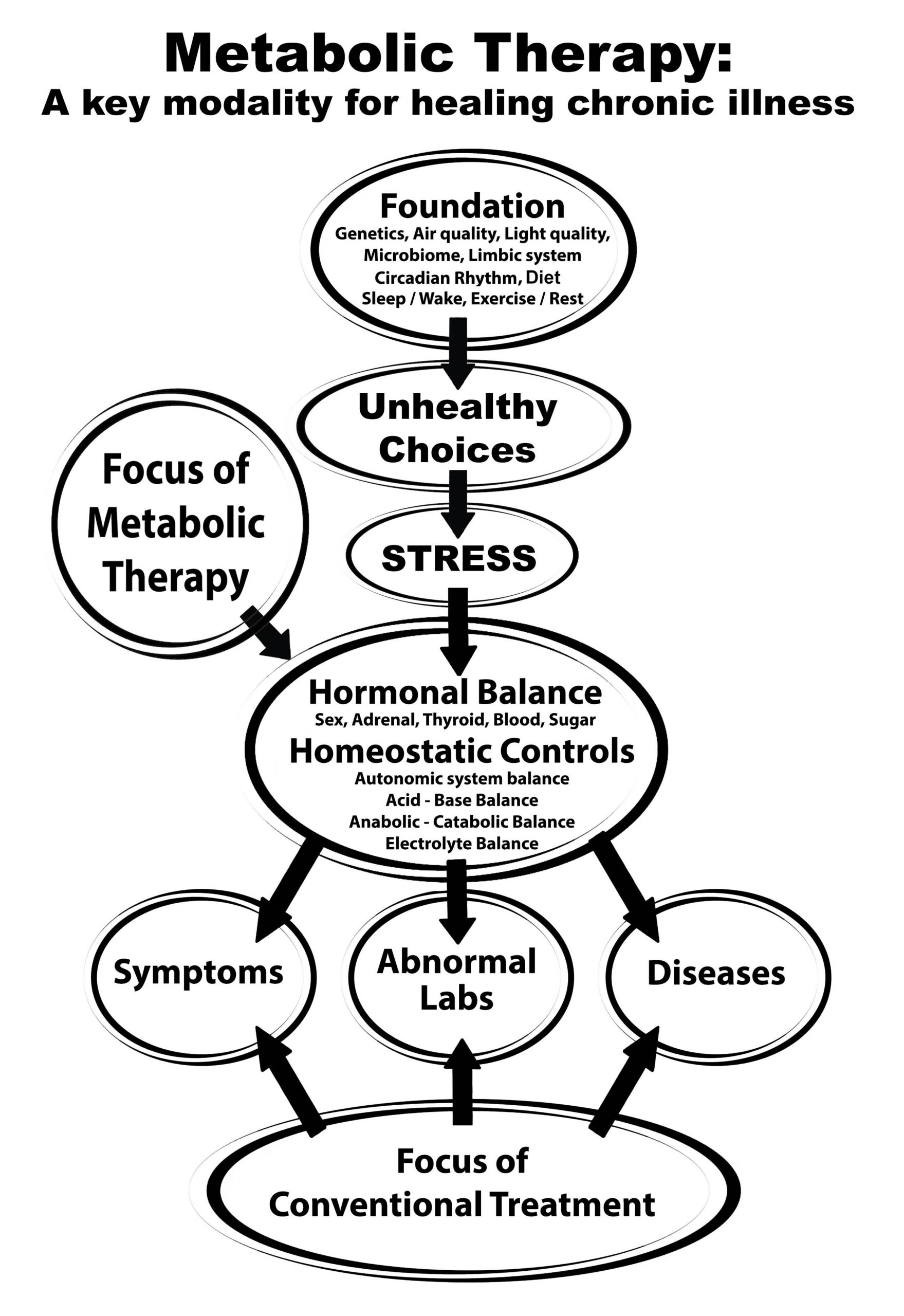
Metabolic medicine is a transformative, science-based approach to understanding and correcting the root causes of chronic illness. Rather than focusing on named diagnoses, metabolic medicine identifies and measures the underlying metabolic imbalances and foundational factors that impair proper functioning across virtually every system in your body.

Dr. Michael Rothman has practiced metabolic and functional medicine for over 20 years, integrating the groundbreaking research of Francis Pottenger, Thomas Riddick, Emanuel Revici, George Watson, and Dr. Guy Schenker into a practical, office-based clinical system. This approach allows him to measure your metabolic imbalances in real time and begin corrective treatment immediately.
Why People Get Sick
Your body is designed to heal itself, but only when its foundational and homeostatic systems are intact. When stressors overwhelm your body’s homeostatic control mechanisms, symptoms appear. Left unaddressed, disease follows.
The root causes of this breakdown are not mysterious. They are measurable, foundational and homeostatic factors that conventional medicine rarely evaluates.

The Foundation of Health
Every patient visit at Michael Rothman MD begins here: with the inputs that either support or undermine your body’s capacity for self-regulation. These foundational stressors are where dysfunction originates, long before symptoms appear on any standard lab panel.
- Nutrition: The food you eat directly fuels or disrupts cellular energy production, acid-base balance, anabolic-catabolic balance, autonomic nervous system balance, electrolyte balance and hormone balance.
- Air quality: Mold, mycotoxins, volatile organic compounds (VOC’s) and other environmental toxins trigger chronic immune responses and systemic inflammation.
- Environmental exposures (including mold and stealth organisms): Water-damaged buildings and indoor biotoxin burden are among the most overlooked drivers of chronic illness.
- Lack of sunlight and exposure to unnatural Electromagnetic frequencies (EMFs) are extremely destructive to energy production and normal functioning of every cell in your body.
- Genetics: Genetic predispositions can create immune blind spots and accelerate metabolic dysfunction under stress.
- Microbiome health: Gut imbalances drive systemic inflammation, nutrient malabsorption, and homeostatic dysregulation.
- Stress load and emotional/limbic system patterns: Chronic stress elevates cortisol, disrupts your hormone cascade,adversely affects your homeostatic control mechanisms and accelerates metabolic dysfunction.
- Circadian rhythm and sleep-wake cycles: Disrupted sleep impairs hormonal regulation, homeostatic controls, detoxification pathways, metabolic repair, and immune competence.
Homeostasis and the U-Shaped Curve
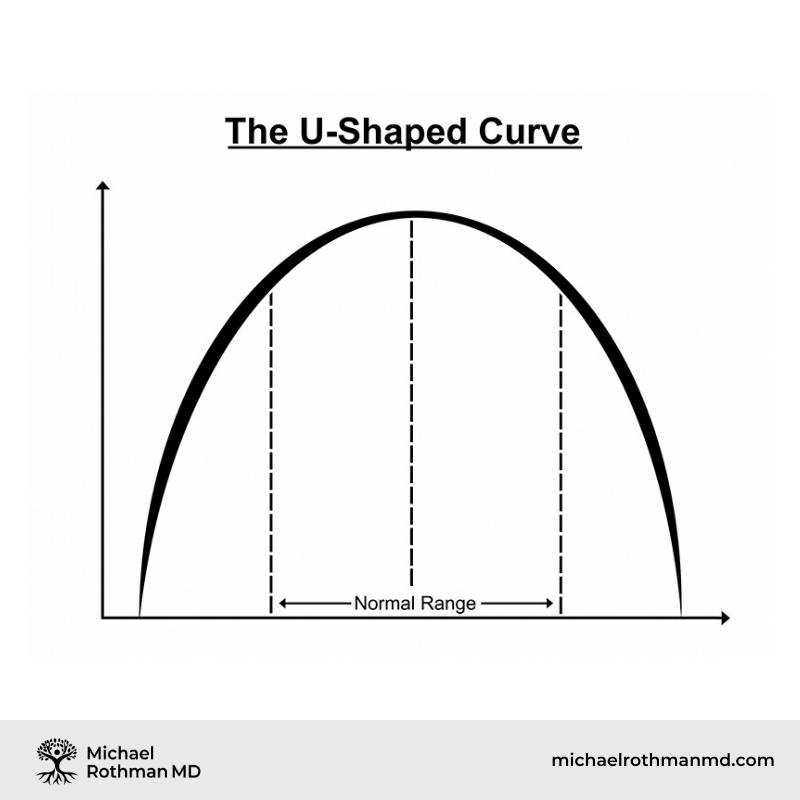
Your body must keep every physiological parameter (including blood sugar, pH, temperature, hormone levels, electrolyte concentrations) within a narrow optimal range. This is homeostasis: a dynamic, continuous balancing act managed by multiple control systems in your body working simultaneously.
The U-shaped curve illustrates this clearly. Health exists in the middle of your physiologic range. Too far in either direction—too high or too low—and symptoms emerge. Your body’s homeostatic mechanisms normally push you back towards the center. But when your homeostatic control mechanisms are impaired your body gets stuck outside the optimal range.
Think of it like sliding over a hill on an icy road: you end up on the wrong side and can’t get back up. Metabolic therapy is what pushes you back over that hill and restores your body’s ability to self-regulate.
Very few health care providers in conventional and even functional medicine are measuring your homeostatic balance and correcting it.
Why Homeostasis Gets Stuck
Under normal conditions, your body’s homeostatic control systems continuously adjust your physiology back toward balance. But when foundational stressors such as poor nutrition, chronic stress, environmental toxin exposure,unnatural EMF’s microbiome disturbances or disrupted sleep/wake cycles overwhelm those control systems, the self-correcting mechanism breaks down.
The result is impaired homeostatic control systems: your body loses the ability to return to balance on its own. Parameters drift outside the optimal range and stay there. Some holistic practitioners refer to this phenomenom as the “cell danger response (CDR). Symptoms follow. Standard labs may still appear normal because conventional medicine measures whether your values fall within a reference range, not whether your control systems are actively maintaining balance.
This is why so many patients feel chronically unwell despite “normal” test results. The problem isn’t that nothing is wrong. The problem is that the wrong things are being measured.
Ready to Get Clarity on What’s Driving Your Symptoms?

What Shapes Your Metabolic Health
Dr. Rothman’s metabolic and functional medicine approach is built on a century of scientifically rigorous research that mainstream medicine has largely overlooked; not because these discoveries were wrong, but because they were inconvenient. Each of the researchers below identified a specific homeostatic control system that your body depends on for balance. Each one is measurable in the office today.

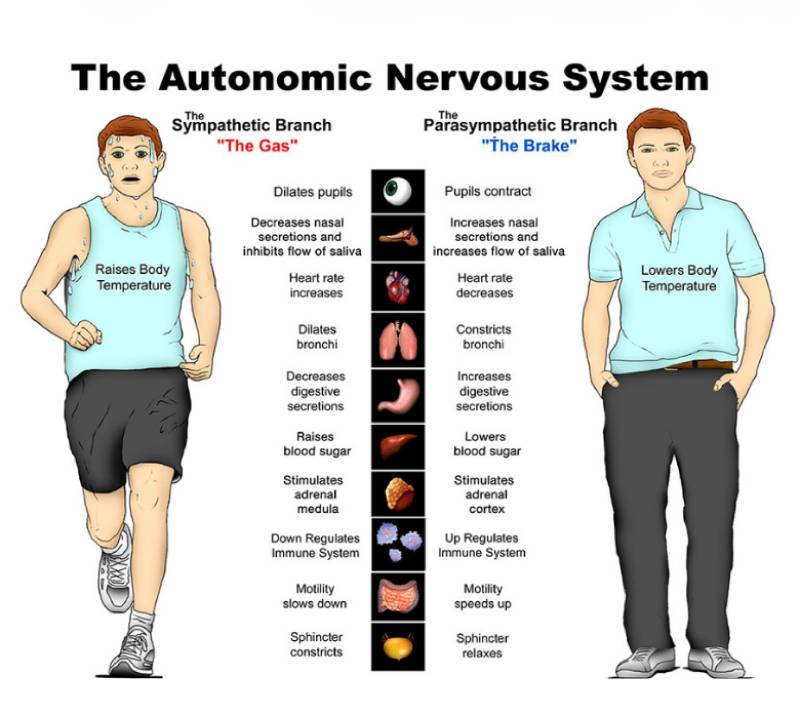
The autonomic nervous system is a core regulator of balance.
Francis Pottenger, MD (1919)
Why it matters: Fight-or-flight vs rest-and-digest shifts can drive symptoms across multiple organs.
What we measure: ANS balance (SNS/PNS pattern)

Blood behaves as a colloid; stability depends on electronegativity (zeta potential)
Thomas Riddick, PhD (mid-1950s)
Why it matters: Reduced colloidal stability contributes to poor blood flow and downstream strain.
What we measure: Colloid stability / electrolyte-mineral pattern (tie to viscosity/flocculation concept)

Anabolic–catabolic imbalance linked to fatty acid activity vs sterol activity balance in cell membranes.
Emanuel Revici, MD (1961)
Why it matters: Cellular membrane lipid balance affects membrane permeability,redox state, acid-base balance, mitochondrial energy production and systemic function.
What we measure: Anabolic–catabolic pattern (fatty acids vs sterols)

Energy production patterns influence acid–base state (Krebs cycle vs Beta - oxidation).
George Watson, PhD (1971)
Why it matters: Overreliance on either fats or carbohydrates in the production of metabolic energy can result in a pH imbalance. Too acidic or too alkaline patterns can adversely affect energy production, colloidal stability, autonomic nervous system and eventually mood/cognitive and body symptoms.
What we measure: Acid–base patterns + fuel utilization (glucogenic/ketogenic tendency)
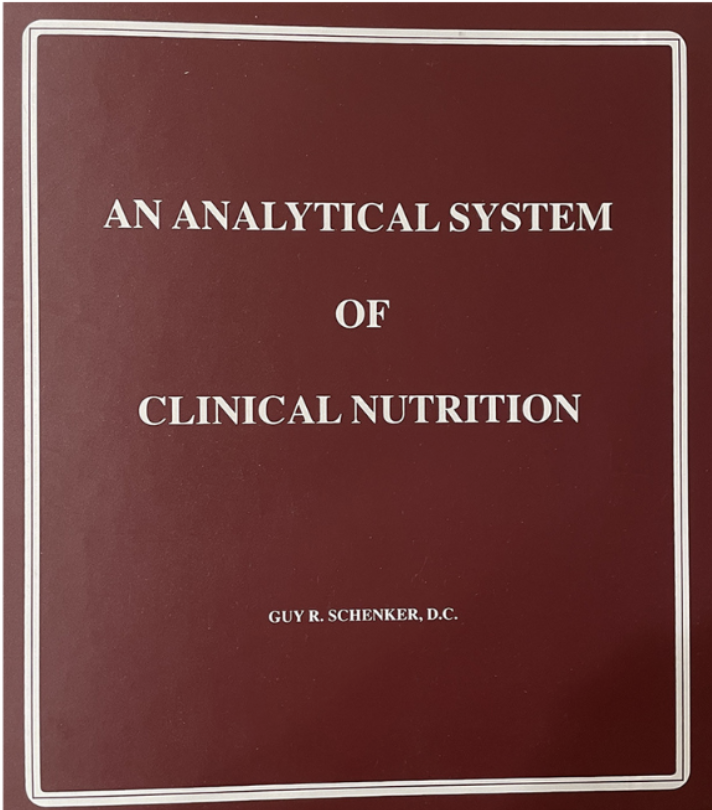
Integrated the above into a practical, analytical in-office system.
Guy Schenker, DC (1987)
Why it matters: Allows for simple, inexpensive office based assessment and interpretation of various homeostatic control mechanisms into measurable parameters and repeatable clinical decisions.
What we measure: A combined metabolic assessment: ANS + electrolyte + acid-base + anabolic/catabolic
What We Measure to Find the Pattern
Each of the landmark discoveries above maps to a specific homeostatic control system your body relies on to stay in balance. Dr. Rothman measures all of these in office, objectively, in real time, to identify the dominant imbalance patterns driving your symptoms.
The in-office metabolic assessment evaluates:
Autonomic Nervous System (SNS/PNS)
Your nervous system runs a continuous tug-of-war between its two branches: sympathetic (“fight-or-flight”) and parasympathetic (“rest-and-digest”). When one dominates inappropriately, autonomic dysfunction produces wide-ranging symptoms, from high blood pressure and palpitations to insomnia, immune suppression, and digestive disruption. ANS balance is measured directly in the office.
Electrolyte and mineral balance
Acid–base balance
Anabolic–catabolic balance
Fuel utilization (glucogenic/ketogenic tendency)

The Metabolic Assessment: Simple, Objective, Real-Time
What to expect
Step 1: Start with your story
Step 2: Walk through the model
Step 3: Measure your homeostatic control systems
Step 4: Identify your metabolic patterns
Step 5: Apply the targeted corrections
Step 6: Re-check and refine
Why This Approach Is Different
Most patients who come to Michael Rothman MD have already been through the conventional medical system, and often the functional medicine system as well. They have had labs run, taken the recommended supplements, and may have been diagnosed with various syndromes (including chronic fatigue syndrome, leaky gut, mast cell activation and fibromyalgia . And yet they still don’t feel well. The reason is very frequently the same: the underlying metabolic imbalances were never measured, or even considered as a root cause of their chronic illness.
Many health care providers are recognizing that chronically ill patients fail to respond to elimination of chronic stressors and typical interventions. These cutting edge practitioners may refer to this phenomenon as the “cell danger response”(CDR), which is almost like a PTSD of your cellular functions. While these healers recognize the CDR they have limited tools to mitigate it. An interchangeable term for the CDR is homeostatic dysfunction, which can be resolved via metabolic therapy
Metabolic Medicine:
Identifies and corrects homeostatic imbalances, including acid-base, anabolic-catabolic, sympathetic-parasympathetic, and electrolyte balance
Advantages: Objective, measurable, individualized; addresses the impaired homeostatic control system directly; real-time results; can explain symptoms that standard and functional medicine alone cannot. Relatively inexpensive
Disadvantages: Requires in-person visits for real-time metabolic testing; not covered by insurance; requires a practitioner trained in this specific system.
Conventional Medicine:
Treats symptoms and diseases utilizing FDA approved drugs and procedures.
Advantages: Widely accessible; strong for acute care and emergencies.
Disadvantages: Does not measure or address the functional, foundational, homeostatic and metabolic imbalances causing diseases and symptoms; consists of a series of one-size-fits-all protocols; symptom suppression without root-cause resolution.
Functional Medicine:
A major step-up from conventional medicine by looking more deeply at biochemical pathways, genetic predispositions, functional problems like “leaky gut” “dysbiosis” “mast cell activation” and stealth organisms
Advantages: Uses objective testing; takes lifestyle and environment into account; more thorough than standard care for chronic conditions.
Disadvantages: Can over-focus on specific pathways and treat them as root causes rather than recognizing them as downstream symptoms of deeper metabolic imbalance. Functional testing can be quite expensive and rarely covered by insurance
Meet Dr. Michael Rothman:
Holistic Health and Metabolic
Medicine Expert
Dr. Michael Rothman is a Functional and Metabolic Medicine Specialist with over two decades of holistic practice. Drawing on his personal experience with Crohn’s disease, he is passionate about utilizing metabolically directed functional medicine to address complex health conditions. Dr. Rothman’s comprehensive method considers dietary habits, genetic predispositions, and environmental factors to identify and treat the metabolic imbalances at the root of health issues.
Certified by the National Board of Medical Examiners and the New Jersey State Board of Medical Examiners, he also holds board certifications in Internal Medicine and previously in Emergency Medicine. His unique approach integrates knowledge from nutrition, biochemistry, physiology, and physics, alongside extensive training in environmental illness, medical acupuncture, naturopathy, Reiki, qigong, and oriental martial arts. Patients can expect a thorough, individualized approach aimed at restoring and maintaining lasting well-being.

Ready to Get Clarity on What’s Driving Your Symptoms?
Frequently Asked Questions
Metabolic therapy is appropriate for anyone experiencing chronic symptoms that have not been adequately explained or resolved through conventional or standard functional medicine approaches. This includes patients dealing with persistent fatigue, unexplained weight changes, mood and cognitive symptoms, hormonal imbalances, digestive issues, cardiovascular concerns, sleep disruption, and many other symptoms. Because the metabolic medicine approach addresses impaired homeostatic control systems rather than specific diagnoses, it is relevant across a wide range of conditions. If you have been told your labs are normal but you don’t feel normal, you are likely a candidate.
Many patients notice a perceivable shift within their first in-office consultation, often within minutes of an initial correction. Over time, as your underlying imbalances are addressed and your homeostatic control systems are restored, the goal is a sustained reduction in symptoms and an improvement in your body’s capacity for self-regulation. Progress is tracked through periodic in-office metabolic re-assessments, repeat laboratory panels monitoring inflammatory markers, hormone levels, nutritional status, and thyroid function, and your ongoing symptom experience. How many visits are typically needed to build and refine a plan?
The initial consultation includes a comprehensive history, environmental and dietary review, an in-office metabolic assessment, and the development of your foundational protocol. Most patients return for follow-up within four to six weeks to re-assess, review labs, and refine the approach. Ongoing care depends on the complexity of your case and how your body responds. Some patients achieve significant stabilization within a few visits; others with more complex or long-standing metabolic imbalances require longer-term support. Dr. Rothman works with you to establish a realistic timeline based on your specific findings.